Industrial · server-powered
Code 11 generator.
Code 11 was designed by Intermec in 1977 for labeling telecommunications equipment, and its name counts its character set: the ten digits plus the dash make eleven. It is a discrete numeric symbology you will still find on trunk cables, relays, and other telecom hardware. Type a number below and the watermarked preview renders as you type.
Digits + dash, telecom equipment labels.
Standards-based quiet zones are always on. For production packaging, verify a printed sample with a barcode verifier.
Preview
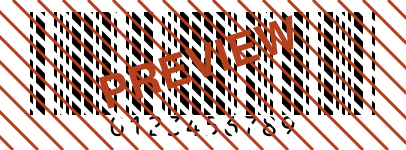 Sample: type to make it yours
- Renders on our servers, the one Plume tool that does.
- We keep the code type and content length, never what you encode.
- Free SVG vector + up to 600 DPI PNG, commercial use allowed.
- Full details in the privacy policy.
Valid Code 11 input
Valid input is any combination of the digits 0 through 9 and the dash character. The live renderer accepts 112-3, a forty digit run, and even a dash on its own. Letters, spaces, periods, and plus signs are all refused before anything is drawn, so there is no risk of a silently wrong symbol.
Code 11 convention adds a weighted C check digit, plus a second K digit on longer messages (ten characters or more by common practice). This generator encodes exactly the characters you type and appends neither, which we verified against the renderer. If the scanner on the receiving end is configured to expect check digits, calculate them and include them in your input.
Working sample: 0123456789 the 0123456789 placeholder is a plain digit run like the serial numbers printed on telecom equipment
Where Code 11 is used
- Asset and serial labels on telecom hardware such as patch panels and central office equipment
- Reprinting labels for legacy inventory systems that were built around Code 11
- Internal numbering schemes where digits and a dash separator are all you need
Common errors and how to fix them
- Code 11 must contain only digits and dashes
- The character set is exactly 0 to 9 plus the dash, nothing else. Remove letters, spaces, periods, and plus signs. If your data genuinely needs them, switch to Code 39 or Code 128 instead of forcing it into Code 11.
- Enter the content to encode.
- The data field was empty. Code 11 has no minimum length here; a single digit or a lone dash renders a complete symbol.
Size and printing
Equipment labels are usually narrow, and a Code 11 symbol grows with every character, so start from the space you actually have. Set the module width in millimeters to the smallest bar your printer and scanner pair can resolve instead of shrinking a screenshot, and let the generator add the quiet zones on both sides for you. Raising DPI (up to 600) recomputes the bitmap at the same physical size with more real resolution, and the vector SVG stays crisp at any scale, which matters for a wide to narrow symbology where blurred edges break decoding.
Code 11 questions
What is a Code 11 barcode used for?
Mainly labeling telecommunications equipment: cables, relays, patch panels. Intermec created it in 1977 for exactly that job, and today it appears almost only where that legacy infrastructure survives.
What characters can Code 11 encode?
The digits 0 through 9 and the dash, eleven characters in total, which is where the name comes from. Anything else is rejected by this generator with an exact error message.
Does Code 11 have a check digit?
The specification convention is one weighted check digit called C, with a second called K on longer messages. This tool encodes your input as typed and does not add either, so append them yourself if your scanning setup requires them.
Should I use Code 11 or Code 128 for a new project?
Code 128. It is denser, carries a mandatory check character, and encodes full ASCII. Choose Code 11 only when existing scanners or printed documentation force it.